What Estate Buyers Should Know About Woodside Living
June 18, 2026
If you are considering an estate property in Woodside, the house is only part of the story. In this market, land, privacy, access, and long-term usability often matter just as much as square footage. Understanding how Woodside works can help you buy with more confidence and fewer surprises. Let’s dive in.
Woodside is known for a rural-luxury character that stands apart on the Peninsula. According to the town’s housing profile, 95% of homes were single-family detached in 2020, and town materials describe Woodside as being almost completely surrounded by natural habitat.
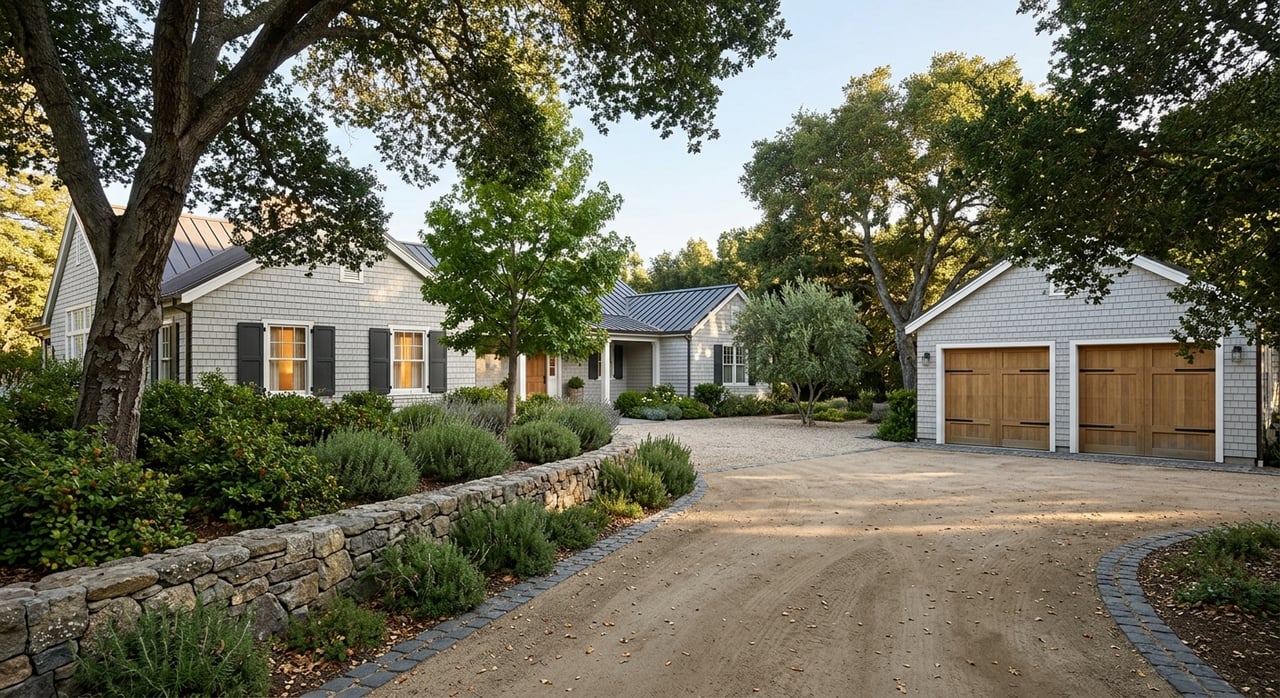
That setting shapes how property is planned and reviewed. Woodside’s design process emphasizes homes and improvements that are subordinate to the land, compatible with the rural vernacular, and thoughtful about site planning, building design, and landscape elements. For you as a buyer, that means the parcel itself deserves as much attention as the residence.
One of the most important things to understand about Woodside is that lot sizes vary widely by zoning district. Residential districts begin at 20,000 square feet in R-1, then move up to 1 acre in SR, 3 acres in RR, 5 acres in SCP-5, 7.5 acres in SCP-7.5, and 10 acres in SCP-10.
That range creates very different living experiences from one property to the next. Some homes offer a more compact estate feel, while others provide large-scale grounds, separation, and a stronger sense of retreat.
Older R-1 areas can also be different from what you might expect. The town notes that areas such as Woodside Glens include many smaller or nonconforming lots, which can affect how a property functions today and what may be possible later.
In Woodside, maximum residence size is tied to lot area rather than one standard formula. The town allows 18% of lot area in SR, 9% in RR, 5.5% in SCP-5, 3.5% in SCP-7.5, and 2.75% in SCP-10, with separate standards for nonconforming lots.
For buyers, this matters because two properties with similar asking prices may offer very different expansion potential. Before you assume you can add square footage, a guest structure, or a new layout, it is worth looking closely at zoning, setbacks, grading constraints, and site review requirements.
In many luxury markets, buyers start with the house and then consider the lot. In Woodside, that order often flips. A beautiful residence on a constrained parcel may offer less long-term flexibility than a simpler home on a stronger site.
The town’s design guidelines favor restrained, site-responsive architecture. They call for simple massing, materials that fit the setting, and an architectural vocabulary that works with the natural environment rather than competing with it.
Privacy is also part of the planning conversation. Woodside’s guidelines ask designers to minimize sight lines from windows and decks to reduce privacy impacts on neighboring properties.
Before moving forward on an estate purchase, it helps to evaluate more than finishes and views. A careful review should include:
For many estate buyers, these details shape day-to-day ownership more than cosmetic features do.
Woodside’s equestrian identity is not just part of its image. The town’s horse guide describes horses as part of Woodside’s frontier past and countrified present, and the local trail system connects to Huddart Park, Wunderlich Park, Edgewood Park, Midpeninsula Regional Open Space District lands, the Bay Area Ridge Trail, and the San Francisco Watershed.
The town also has a Trails Committee focused on protecting and expanding the public equestrian and pedestrian trail network. That adds real value for buyers who want direct access to an outdoor lifestyle tied to the land.
If you are considering a horse property, the practical side matters. Stable permits and inspections are required, and property owners must comply with local stable rules.
A horse-ready parcel should work well in daily use, not just look the part. Useful questions include:
The town also requires permits for fences, walls, gates, pylons, and berms, and automatic gates receive additional Fire District review. Woodside encourages open, wildlife-friendly fencing that helps preserve the rural atmosphere.
Utility infrastructure in Woodside is highly parcel-specific. Piped sewer service exists only in the Town Center Sewer District and the county’s Fair Oaks Sewer District. Parcels outside those mapped sewer areas are on septic.
That distinction is important because septic repairs, upgrades, new systems, and percolation tests require both Town review and San Mateo County Environmental Health review. If a property relies on septic, you will want to understand the system’s condition, capacity, and any future constraints early in your diligence process.
An accessory dwelling unit can create flexibility for guests, extended family, or staff, but approvals still depend on site conditions. The town notes that geotechnical and seismic hazards, easements, steep slopes, stream corridors, septic suitability, infrastructure, and Fire District standards can all affect whether an ADU is feasible.
There are also parcel-size rules. For example, in R-1, detached ADUs are allowed only on parcels of at least 20,000 square feet.
Wildfire preparation is now a core part of owning property in Woodside. The Woodside Fire Protection District adopted Fuel Mitigation Ordinance 24-01 in 2024, which requires defensible space.
The town also offers a matching fund and a chipper program to help residents reduce fuel around homes. For estate buyers, this means wildfire readiness is not a side issue. It is part of how the property is maintained and protected over time.
Woodside’s design guidelines also note that the town is an urban-wildland interface community where fire-resistant construction matters. If you are planning renovations or a custom build, that should be part of your planning from the start.
Many buyers are drawn to estate properties for privacy and visual impact. In Woodside, the design language is more restrained. The town favors homes that sit comfortably within the landscape, with minimal disturbance to natural terrain and materials that fit the setting.
That does not limit quality or beauty. It simply means the most successful properties often feel grounded, quiet, and well-placed rather than overly formal or attention-seeking.
For a buyer, this is helpful context when comparing homes or evaluating a future remodel. Architectural ambition still matters, but in Woodside, fit and stewardship carry real weight.
Woodside tends to appeal to buyers who want more than a luxury address. It is often a strong fit if you value land, privacy, outdoor access, and a property lifestyle that includes ongoing stewardship.
It may be especially compelling if you are looking for:
By contrast, buyers seeking a more conventional, low-maintenance suburban experience may find that Woodside asks for a different level of involvement.
In Woodside, buying well means looking beyond the residence itself. Zoning, lot size, privacy, utility infrastructure, wildfire readiness, access, and design constraints all influence how a property lives now and what it can become later.
That is why a careful, property-specific review matters so much here. When you understand the parcel as clearly as the home, you are in a much better position to choose an estate property that supports your goals for the long term.
If you are considering Woodside and want a measured, high-touch approach to evaluating estate properties, Yvette Stout can help you assess both the visible appeal and the less obvious details that shape value, usability, and peace of mind.
Stay up to date on the latest real estate trends.
Whether you're looking to purchase or sell, get expert advice and personalized support every step of the way.