Inside The Woodside Lifestyle: Trails, Estates, And Equestrian Living
April 16, 2026
If you are drawn to privacy, open space, and a more grounded pace of life, Woodside stands out on the Peninsula. This is a town where trails are part of daily life, large-parcel properties shape the landscape, and equestrian culture still feels woven into the community rather than staged for show. If you are exploring whether Woodside fits your lifestyle or your real estate goals, this guide will help you understand what makes it distinct. Let’s dive in.
Woodside has long protected a rural, low-density identity. According to the Town of Woodside history, the area evolved from early lumber activity into farms, ranches, vineyards, and country estates, and the town incorporated in 1956 to maintain local control over planning and zoning as the Peninsula grew.
That character still shows up in how the town is planned today. Woodside’s housing appendix outlines residential districts that range from smaller suburban lots to larger rural parcels, including 3-acre minimum lots in RR zoning and even larger conservation-oriented zones with 5-, 7.5-, and 10-acre minimums. In many of these areas, septic systems support the town’s low-density pattern, which feels very different from a typical suburban street grid.
For you as a buyer or homeowner, that often means space, separation, and a stronger connection to the natural setting. It also means Woodside is not trying to be everything at once. Its appeal comes from preserving a specific kind of Peninsula lifestyle.
Woodside describes itself as being almost completely surrounded by natural habitat, and the town’s Backyard Habitat Program encourages preservation of wildlife corridors and habitat on private property. That tells you something important about the local mindset.
Here, the landscape is not just visual. It is part of the town’s identity and part of how many property owners think about stewardship. For buyers who value land, views, and a sense of retreat, that can be a meaningful part of Woodside’s appeal.
One of the clearest signs that Woodside offers a different lifestyle is its trail system. The town’s General Plan maps include distinct layers for public equestrian trails and pedestrian pathways, and the Trails Committee exists to protect, preserve, and enhance that public trail network.
This is not just about weekend recreation. Woodside’s local committees also support circulation planning that includes motorists, bicyclists, pedestrians, and equestrians. The town’s committee guidance makes clear that horseback riding is part of how Woodside functions, not just part of its image.
For you, that can translate into a daily rhythm that feels more connected to the outdoors. Whether you walk, ride, or simply value the open-space network around you, the town’s infrastructure reflects that lifestyle.
Woodside’s trail access extends well beyond residential streets. Several nearby parks and preserves help define the experience of living here.
At Huddart Park, located just west of Highway 84, you will find trails for hiking and select routes for horseback riding. Wunderlich Park spans more than 900 acres, includes many equestrian-accessible trails, and preserves the historic Folger Stable while also supporting horse boarding.
Midpen preserves add even more variety. Thornewood Preserve offers all-trails equestrian access and is described as a place for easy hikes or horseback rides. The same preserve network also includes La Honda Creek Preserve, with more than 17 miles of trails where hiking and horseback riding are allowed on all trails, as well as Long Ridge Preserve, which is used by hikers, cyclists, and equestrians.
If outdoor access is a major part of how you define home, Woodside offers a setting where trails are truly part of the lifestyle equation.
Woodside’s equestrian identity is one of the town’s clearest distinguishing features. The presence of mapped equestrian trails, committee oversight, and public open-space access all point to a community where horse-oriented living remains visible and active.
That is reinforced by the Horse Park at Woodside, which was established in 1981 and spans more than 270 acres. The park is dedicated to land preservation and equestrian sport, with cross-country, arena, and other horse facilities. It also notes that Stanford University’s Polo Club Team practices and competes there.
For buyers seeking estate properties with room, privacy, and access to equestrian amenities, Woodside offers a rare Peninsula combination. Even if you are not an equestrian yourself, the town’s horse-centered character helps shape its pace, land use, and visual identity.
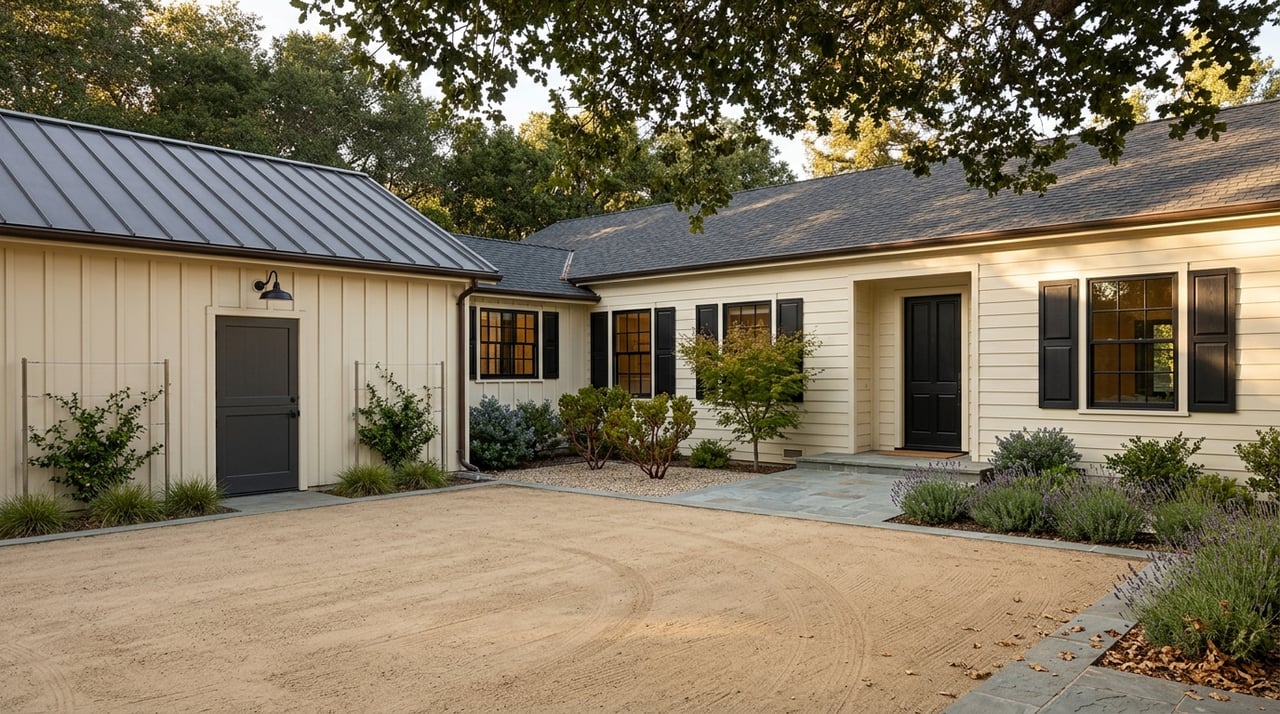
Woodside is often associated with estate-scale living, and that reputation is grounded in the town’s actual land-use pattern. Larger lot minimums, rural zoning, and conservation-oriented parcels create a built environment where homes often sit within a broader landscape rather than shoulder-to-shoulder with neighbors.
That affects more than curb appeal. It influences privacy, how homes are positioned on the land, and the overall feeling of ownership. For many buyers in this segment of the Peninsula market, Woodside offers something increasingly hard to find: meaningful separation, natural surroundings, and a strong sense of place.
It also means each property deserves careful evaluation. In a market shaped by parcel size, topography, access, and setting, understanding the nuances of Woodside real estate is especially important.
Filoli is perhaps the best-known expression of Woodside’s estate heritage. According to Filoli’s history, the property covers 654 acres in Woodside, was built as a private residence in 1917, and opened to the public in 1975. Today, it includes the mansion, formal gardens, orchards, natural lands, and trails, and it remains one of the most recognized country estate properties of the 20th century.
Woodside’s local history also shows up in smaller civic landmarks. The town’s history page notes the Woodside Community Museum at 2961 Woodside Road and the restored Independence Hall next to Town Hall, which now serves as a space for meetings and events.
These places matter because they reinforce continuity. Woodside does not feel manufactured or recently assembled. Its identity has been built over time, and that often resonates with buyers looking for authenticity rather than convenience alone.
Woodside’s center is intentionally compact. The town’s Town Center planning materials describe a village hub that includes a local grocery store, hardware store, restaurants, shops, offices, and Town Hall, rather than a large commercial district.
That small-scale format is part of the appeal. It gives you access to daily essentials and familiar local gathering places without changing the overall rural tone of the community. Planning updates also focus on walkability and circulation for vehicles, pedestrians, equestrians, and bicycles, which reflects the town’s effort to preserve function without losing character.
Woodside’s restaurants do more than serve meals. They help shape the social rhythm of the town and reinforce its destination appeal.
Buck’s of Woodside says it opened in 1991, is open daily, and has become an informal gathering place associated with Silicon Valley. The Village Pub, which opened in 2001, notes that it has earned one Michelin star for 12 consecutive years and sources much of its produce from SMIP Ranch in the hills above Woodside.
Beyond the center, Alice’s Restaurant on Skyline Boulevard describes itself as a gathering place for families, hikers, equestrians, locals, and visitors, while The Mountain House traces its origins to the early 1900s. Together, these destinations support a lifestyle that feels both rural and connected.
A major part of Woodside’s appeal is that it feels tucked away without feeling cut off. The town’s Town Center Area Plan materials note that the center is served by Highway 84, Canada Road, and Mountain Home Road, with Woodside Road connecting into the town from Interstate 280.
That road network helps connect Woodside to the broader Peninsula while preserving a quieter residential environment. The area also has ties to nearby Stanford land. Woodside’s trail mapping identifies Jasper Ridge as Stanford land, and Stanford’s Jasper Ridge Biological Preserve is recognized as a 1,193-acre living laboratory and outdoor classroom.
For many buyers, that balance is the key. Woodside offers a setting that feels scenic and private, while still remaining part of the larger Stanford and Silicon Valley orbit.
Woodside tends to resonate with buyers who value land, privacy, and a slower visual rhythm. You may find it especially compelling if you want:
The right fit often comes down to lifestyle as much as architecture. In Woodside, the setting is part of the property experience.
Woodside is not a one-size-fits-all market. Property value can be shaped by lot size, zoning, access, terrain, privacy, and how a home relates to trails, open space, or the town center. That makes local perspective especially valuable when you are evaluating opportunities or timing a sale.
If you are considering a move in Woodside or simply want a clearer picture of how this market fits into your Peninsula plans, working with a thoughtful advisor can help you weigh both the financial and lifestyle sides of the decision. For tailored guidance on buying or selling in the Peninsula luxury market, connect with Yvette Stout for a private consultation.
Stay up to date on the latest real estate trends.
Whether you're looking to purchase or sell, get expert advice and personalized support every step of the way.